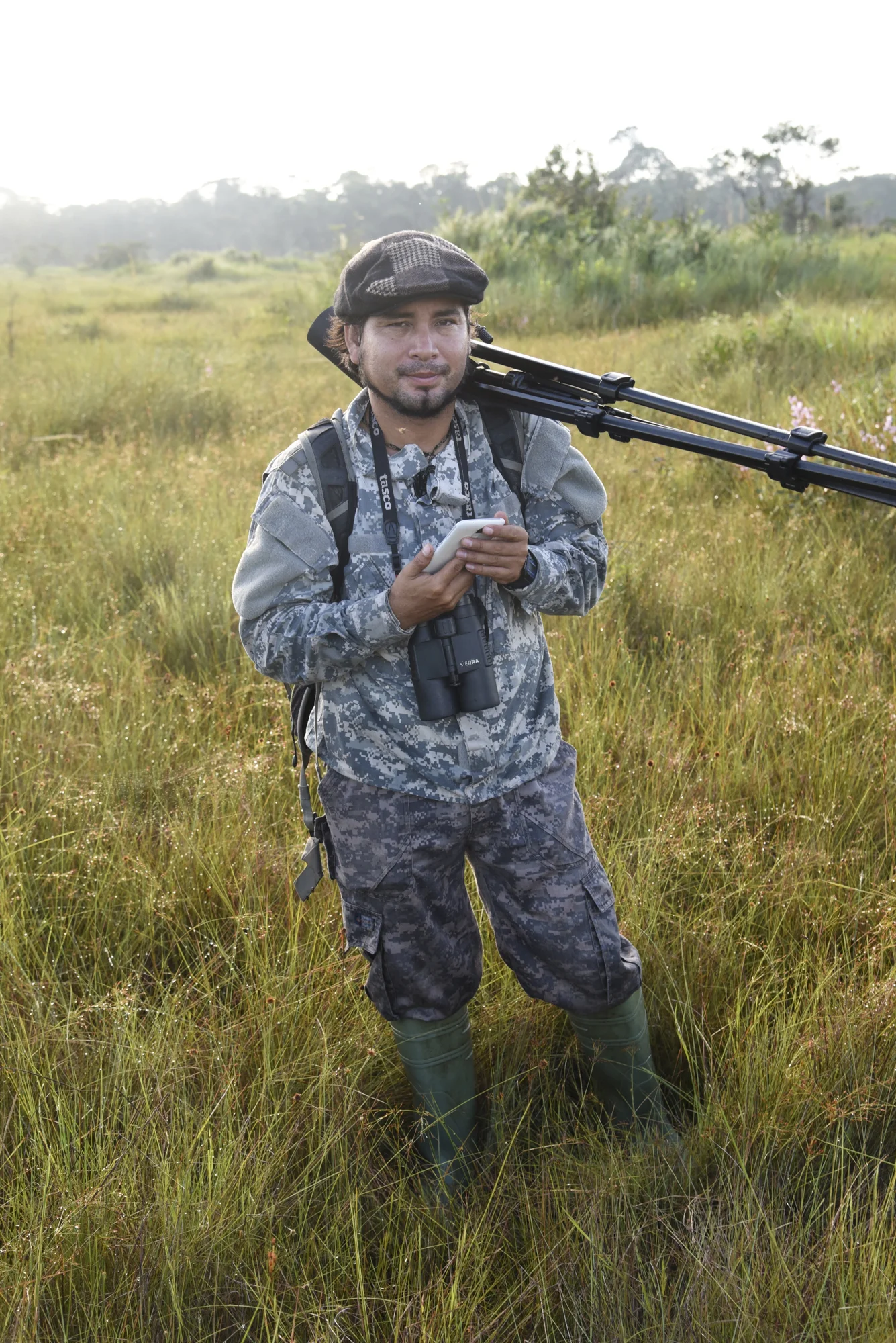
Yohamir Casanaca Leon has previously worked monitoring wildlife in Pampas de Heath, Peru with his non-profit employer, AIDER. He spent his second Global Big Day in the savanna with the aim to contribute endemic species to the world list.
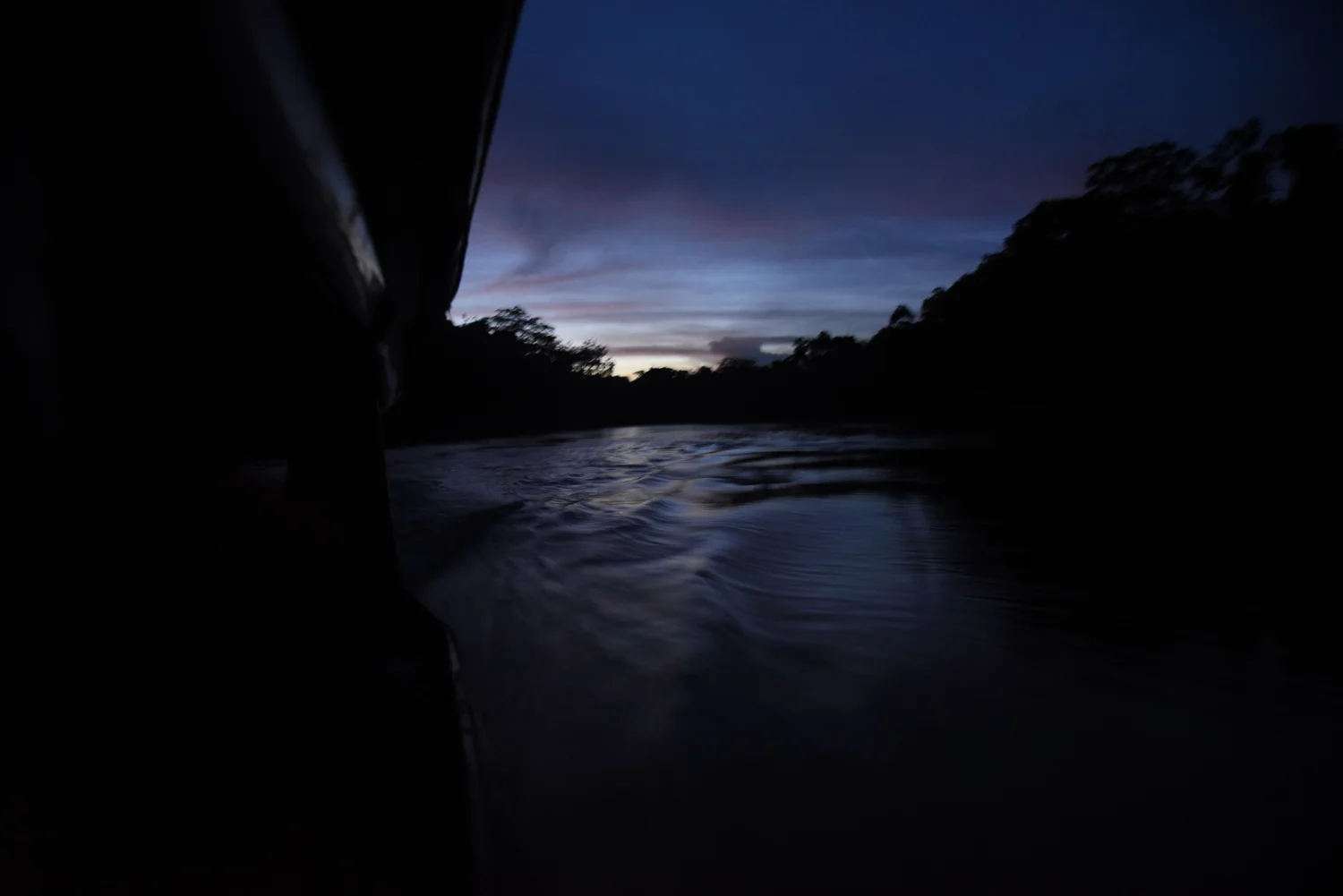
Boat driver, Manfred Cruz Zuvieta, navigates the last several hours of the journey to Pampas de Heath by night before arriving to camp across the river in Bolivia.
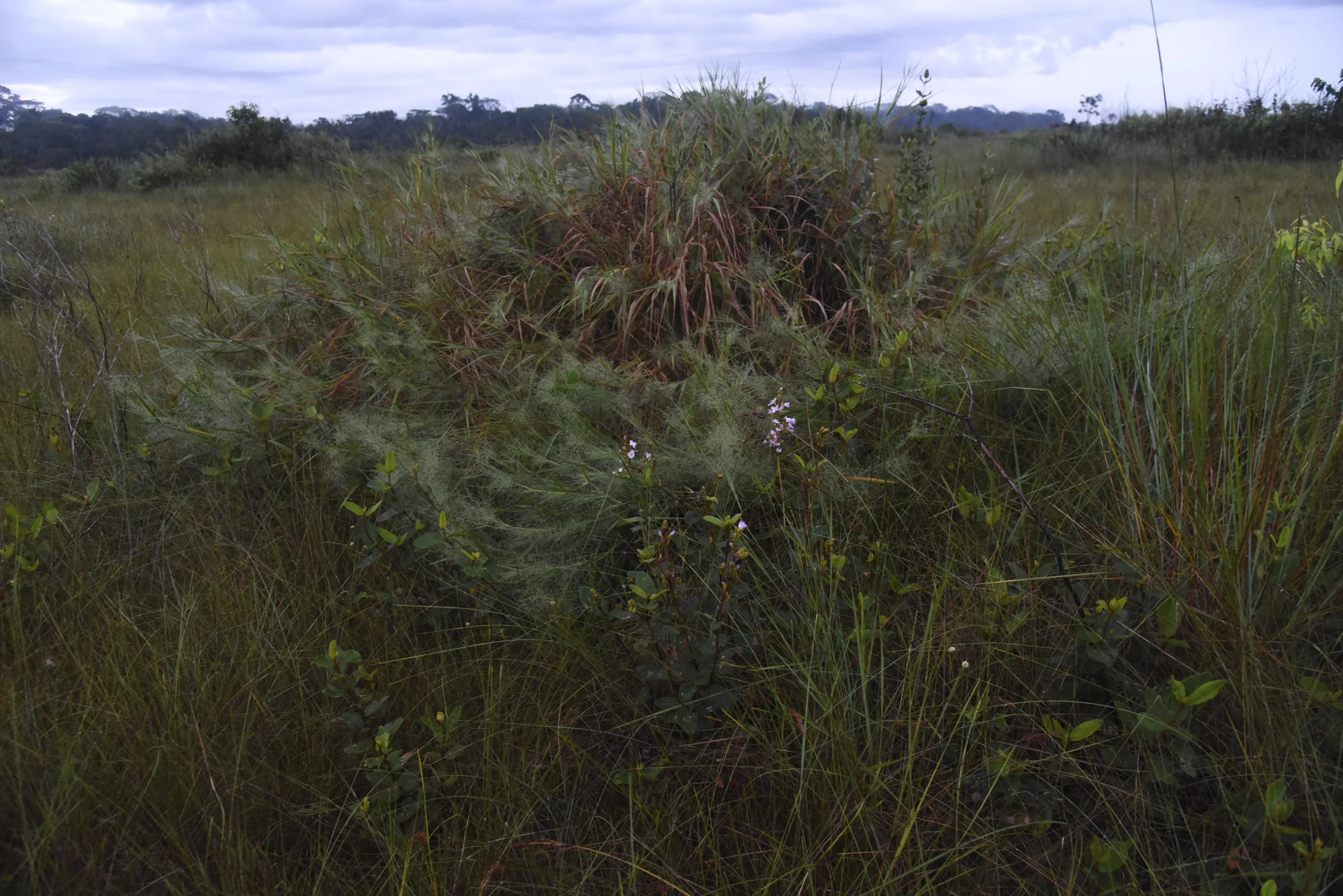
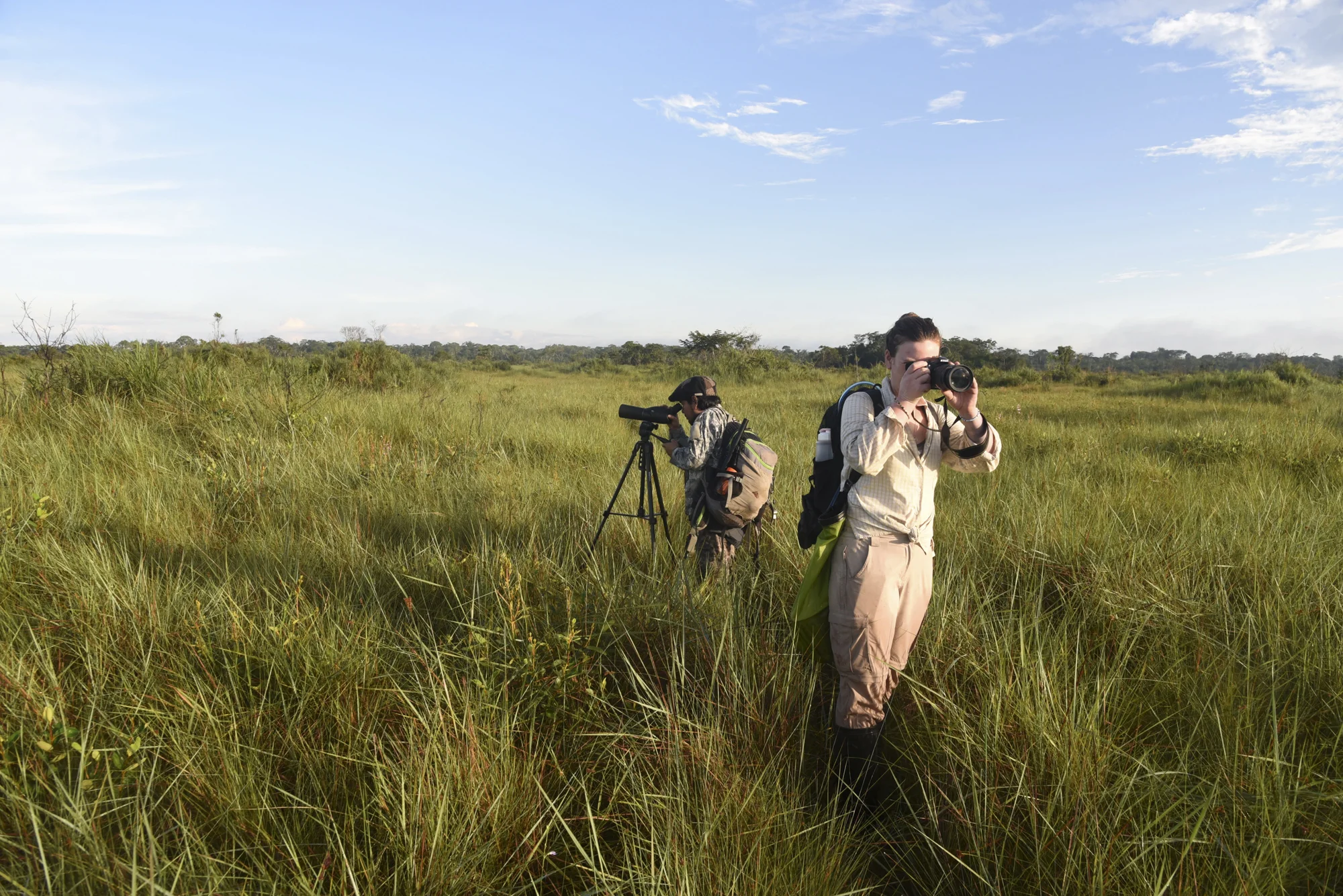
A variety of grasses and shrubs provide an ideal habitat for many birds in the Pampas de Heath.

The sun rises over the savanna of Pampas de Heath as birds chorus from the nearby forest.
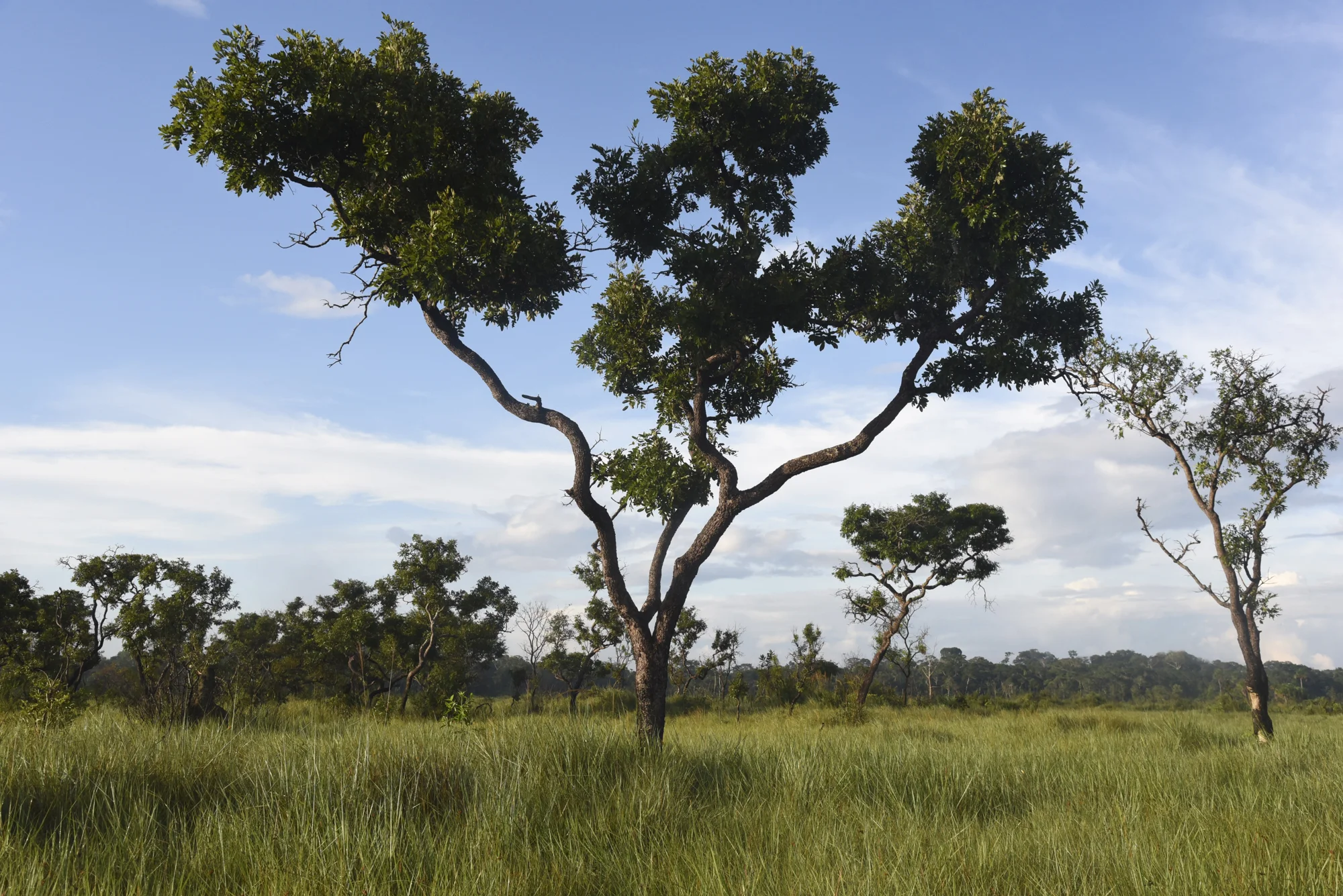
Maisie, who grew up in Botswana, remarked how much it reminder her of the savanna found in southern Africa.
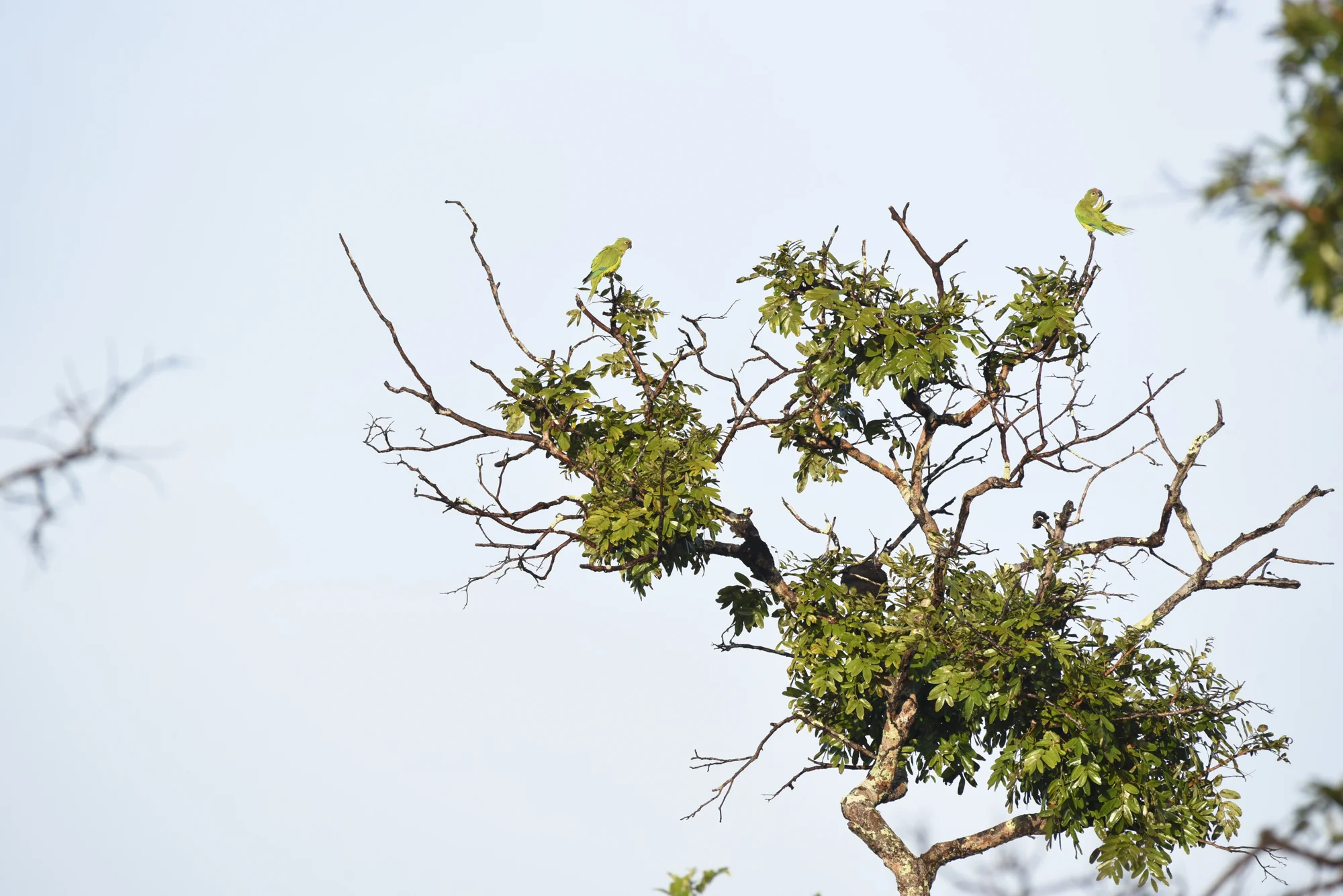
Endemic Peach-fronted parakeets (Aratinga aurea) perch and preen on a tree in Pampas de Heath, Peru.
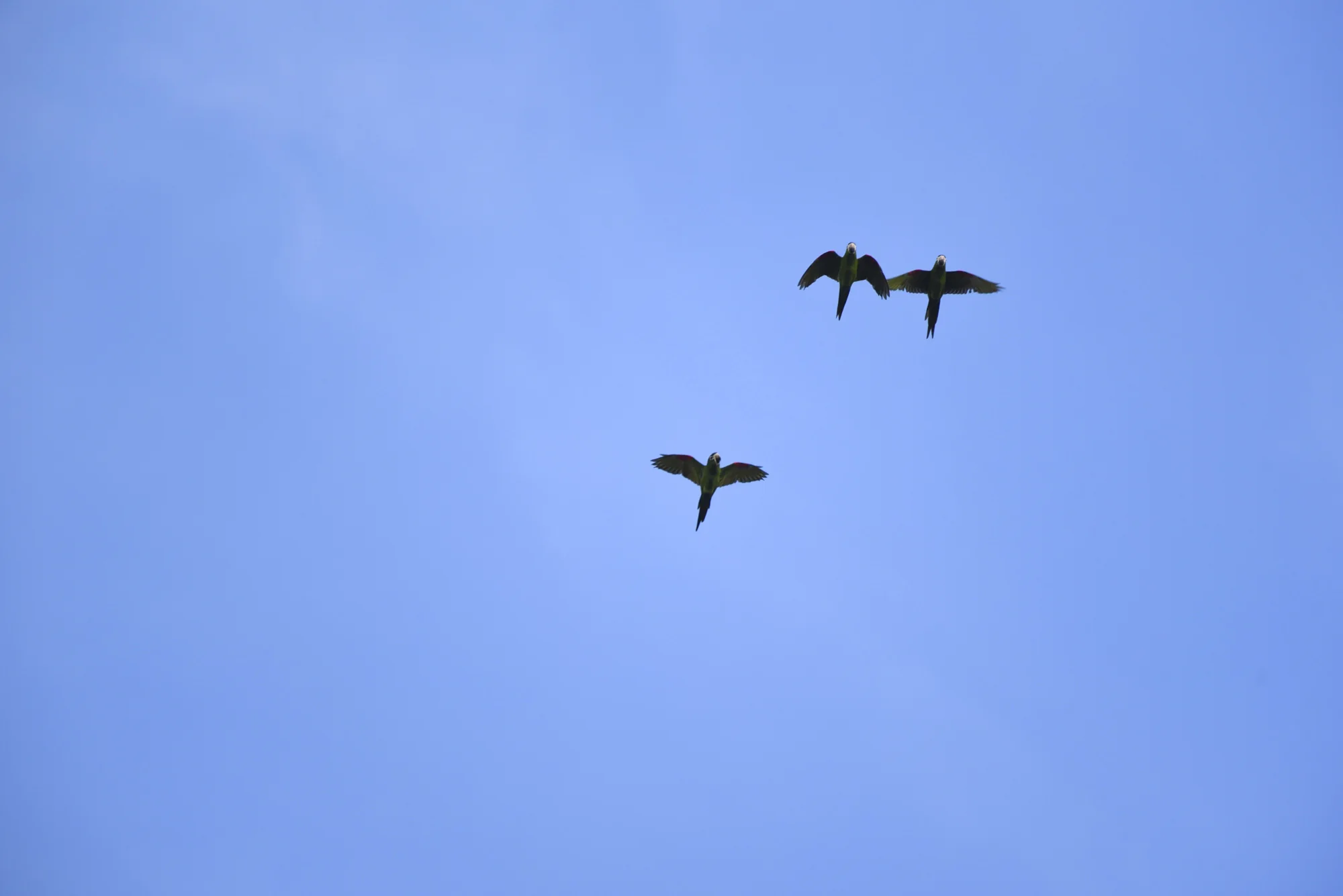
Red-shouldered macaws (Diopsittaca nobilis), the smallest of the macaws, are endemic to Pampas de Heath but have recently been spotted in new locations, presumed to be spreading their range.
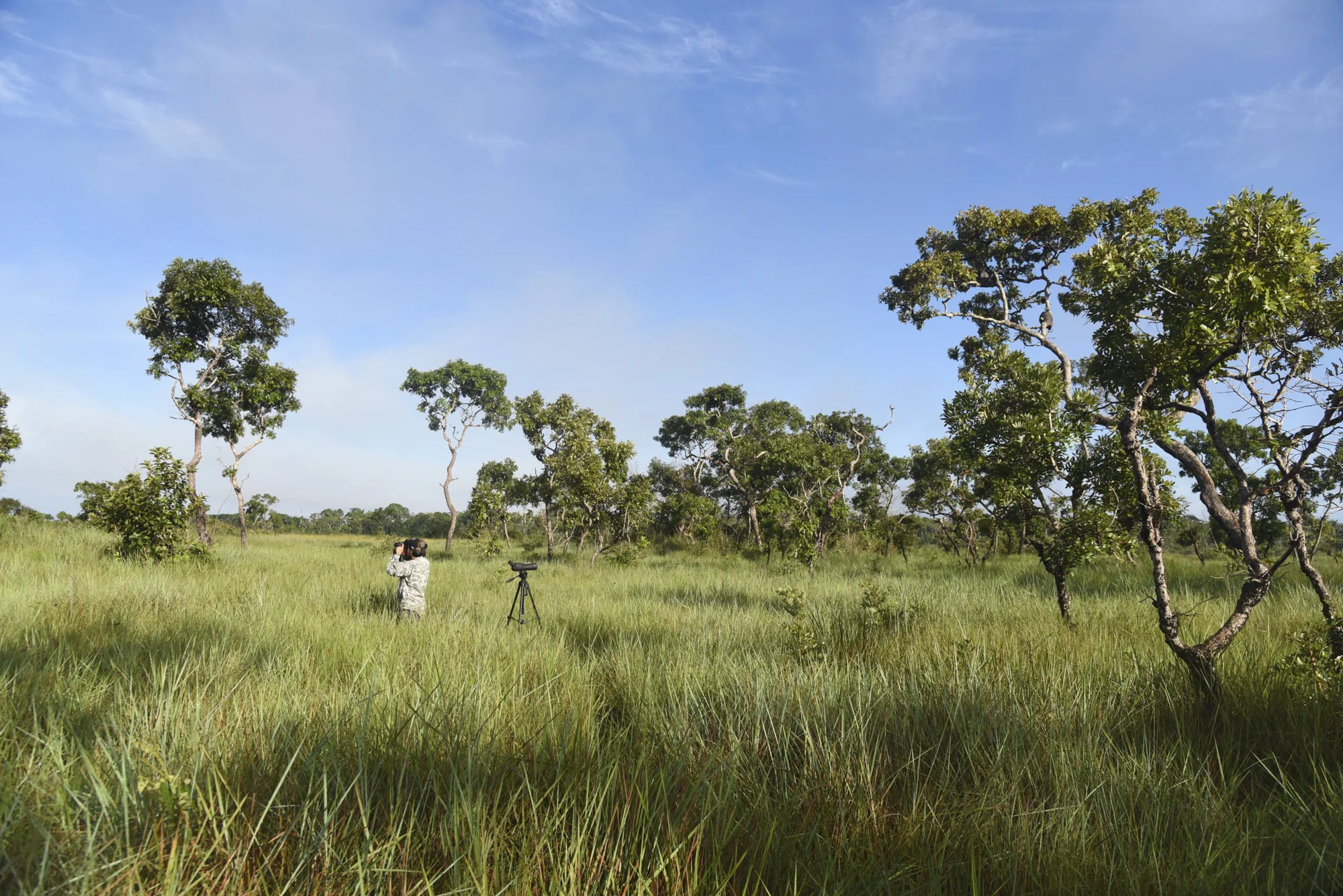
Yohamir continues to search for a bird he only caught a brief sighting of, hoping to ascertain its ID.
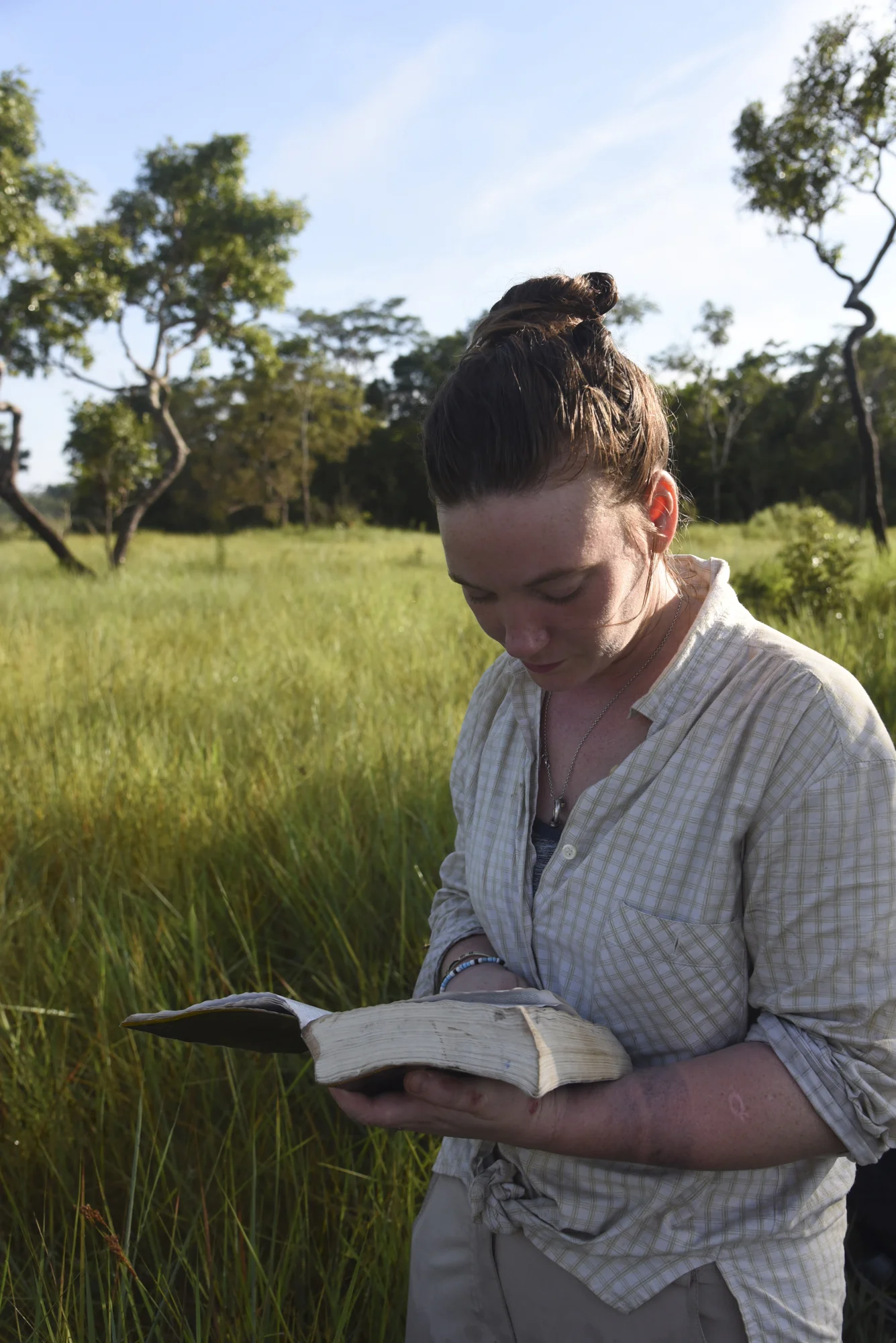
Maisie studies the “Birds of Peru” guidebook, which she was tasked by Yohamir to carry and help locate different species inside the pages.
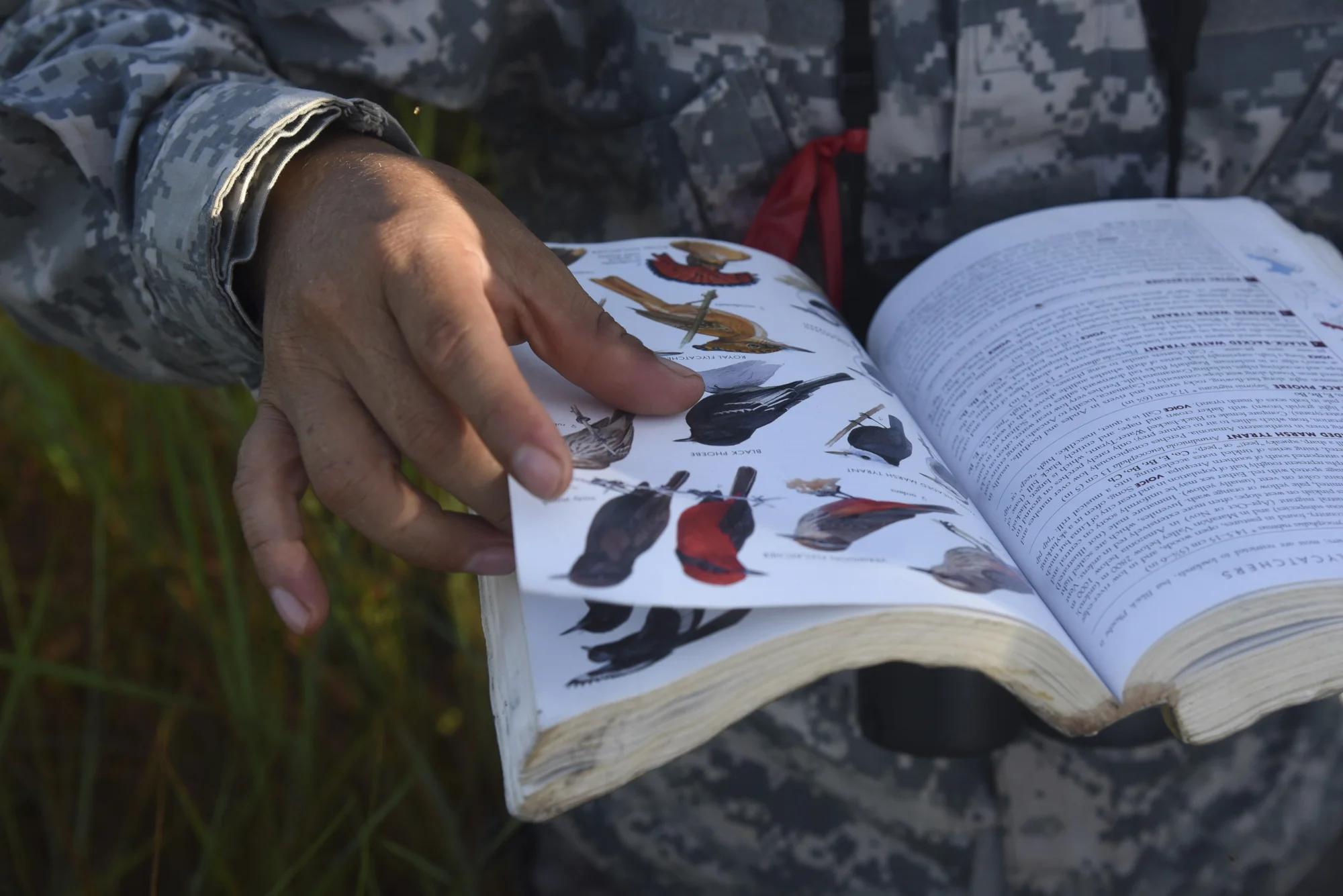
Yohamir scans his copy of the "Birds of Peru" book to confirm species identification and ranges.
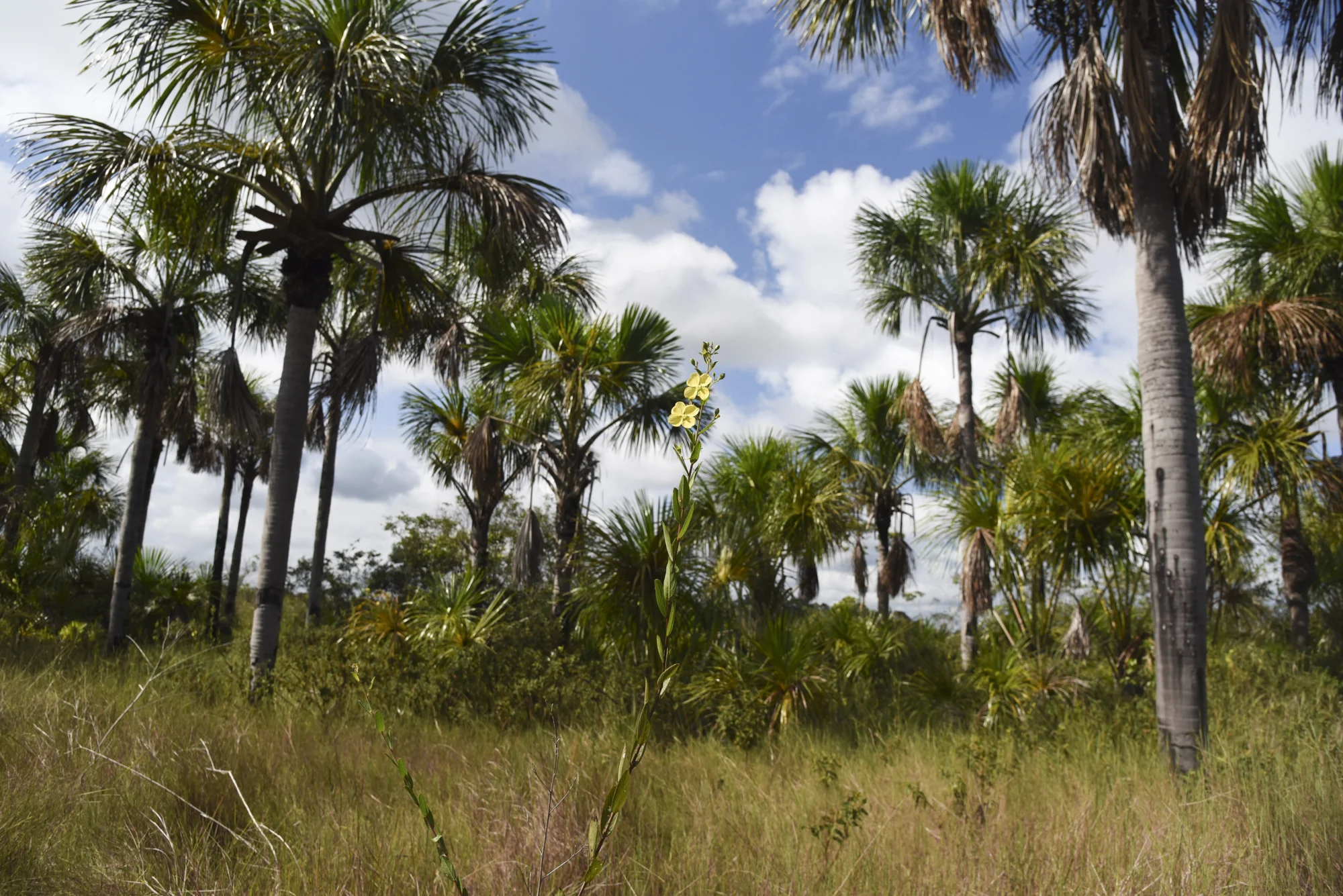
Clusters of palm trees provide ideal habitat for some Pampas’ birds such as parrots, parquets and the White woodpecker.
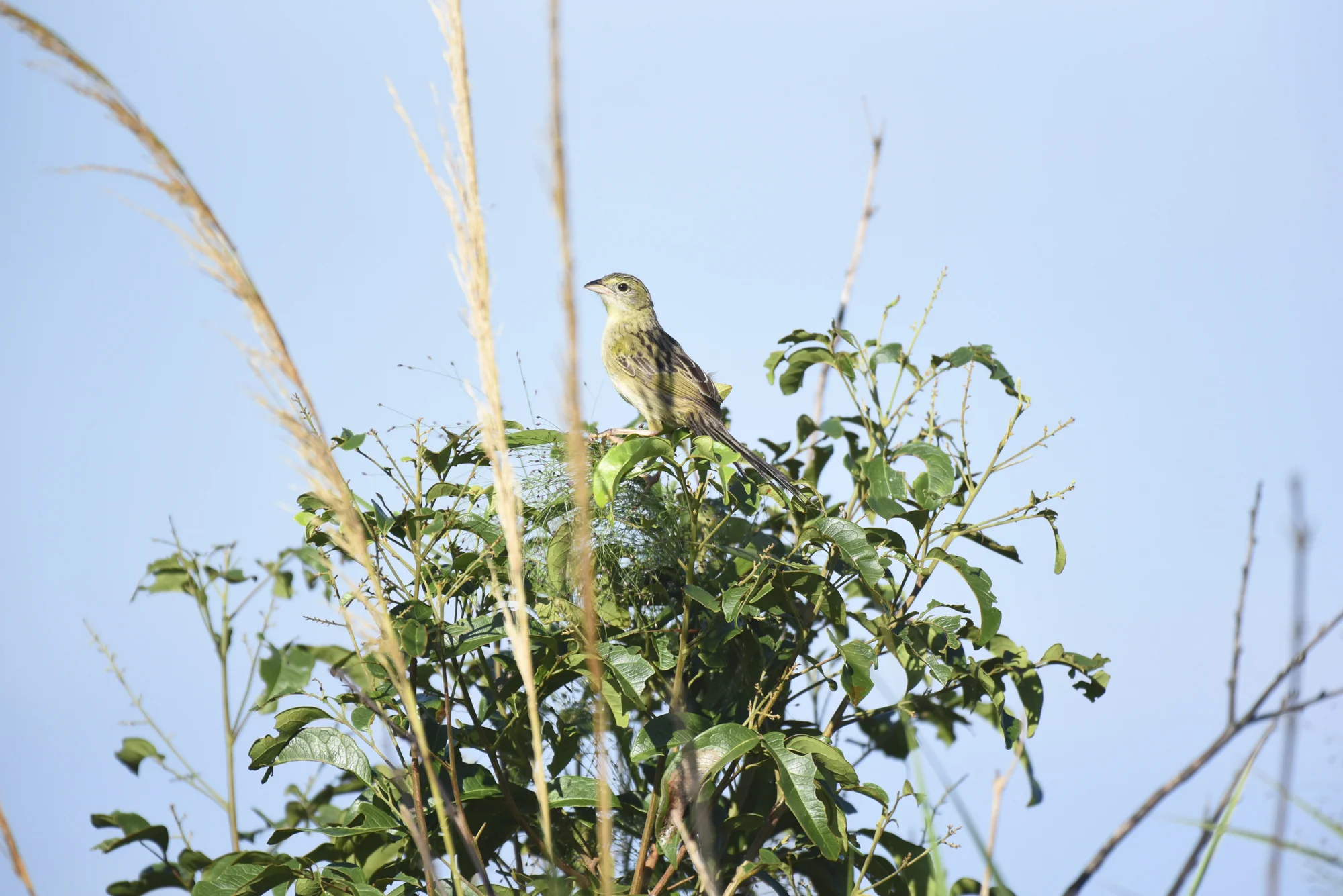
A Wedge-tailed grass-finch (Emberizoides herbicola) perches near its flock on the Pampas de Heath. This species is endemic to the region and three other small grasslands habitats throughout Peru.
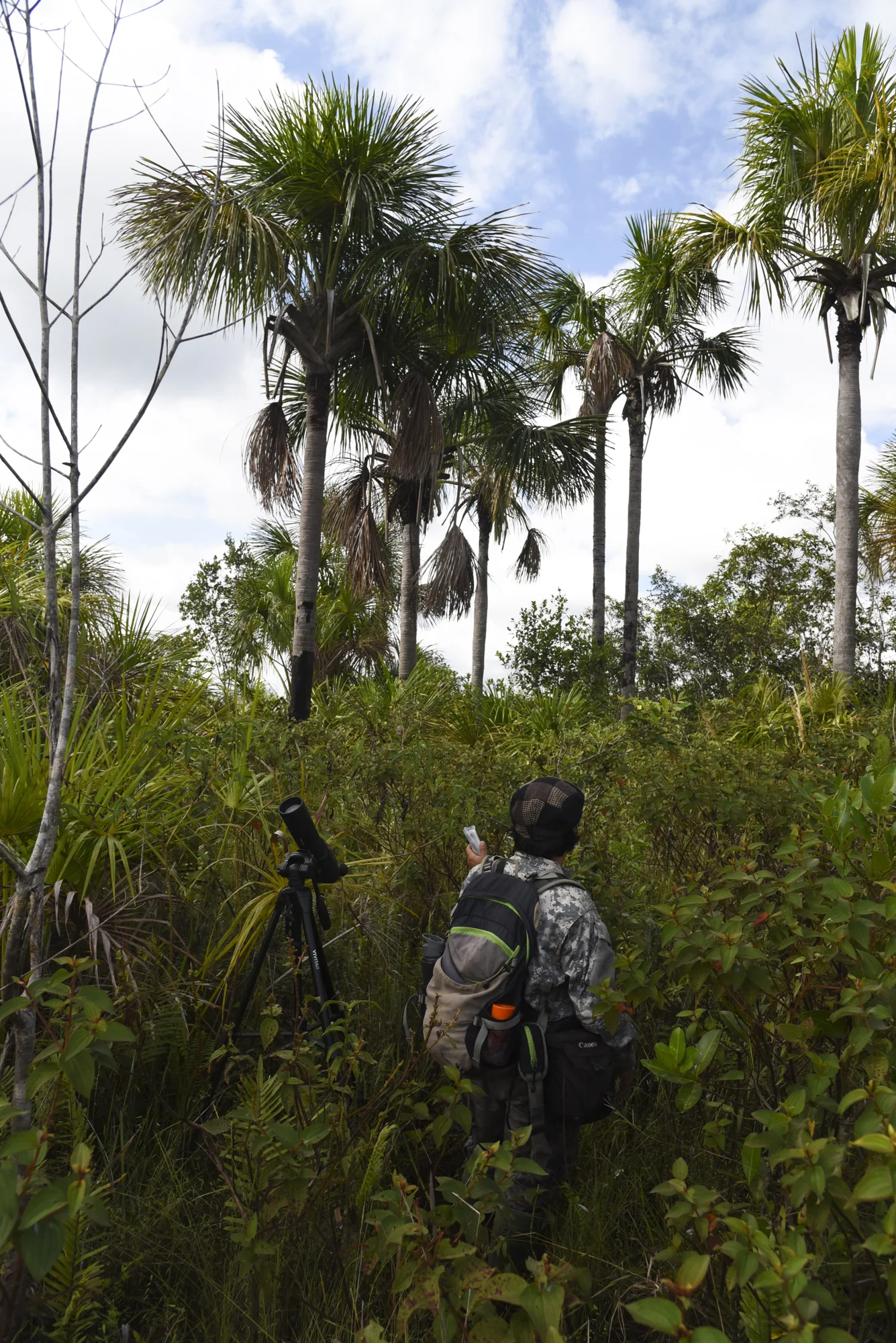
Hoping to draw out the charismatic and endemic White woodpecker, Yohamir plays a recorded call in a stretch of palm trees, their preferred habitat.
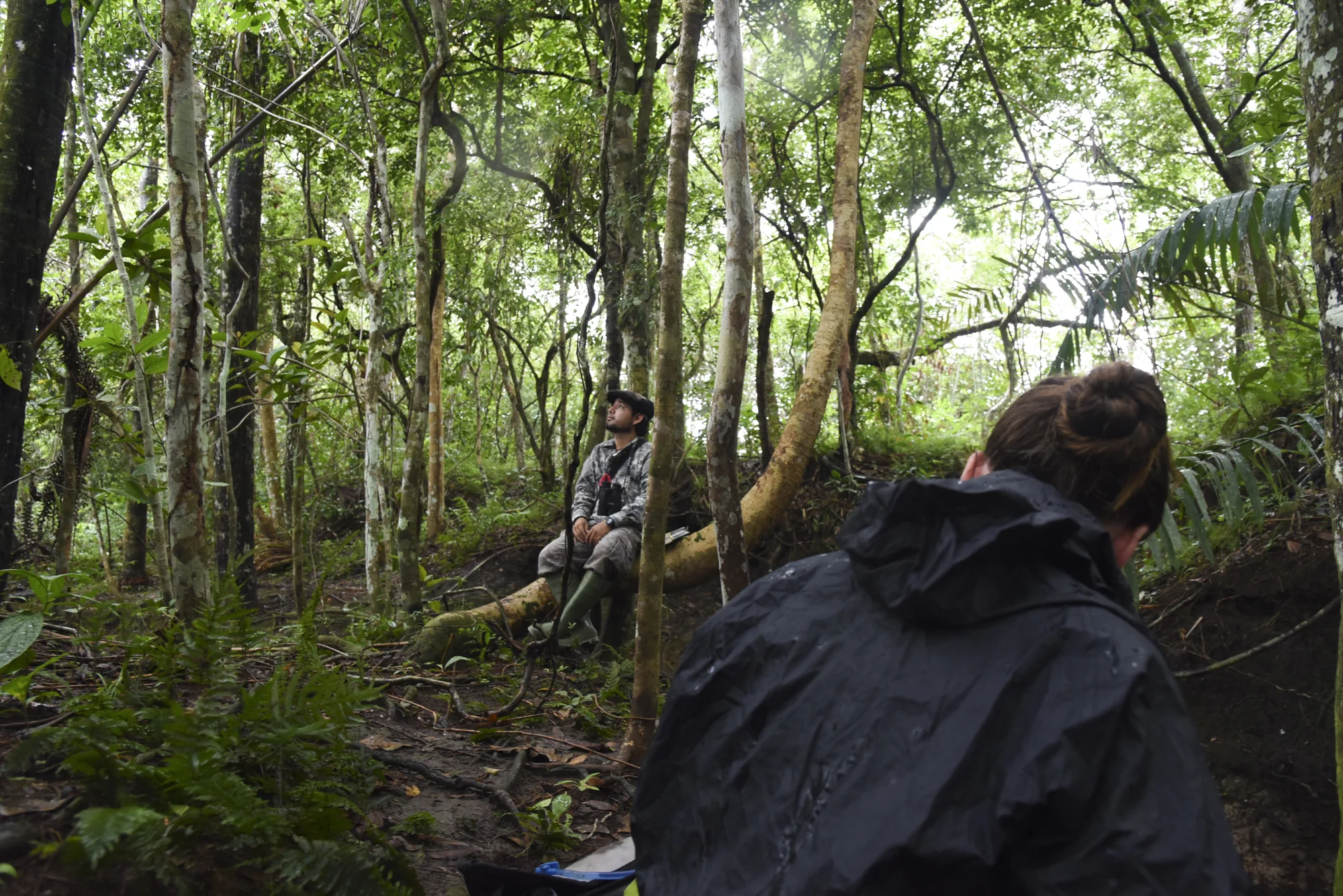
A heavy drizzle of rain drives Yohamir and Maisie back to the gallery forest where Yohamir continues to scan the forest for additional species.
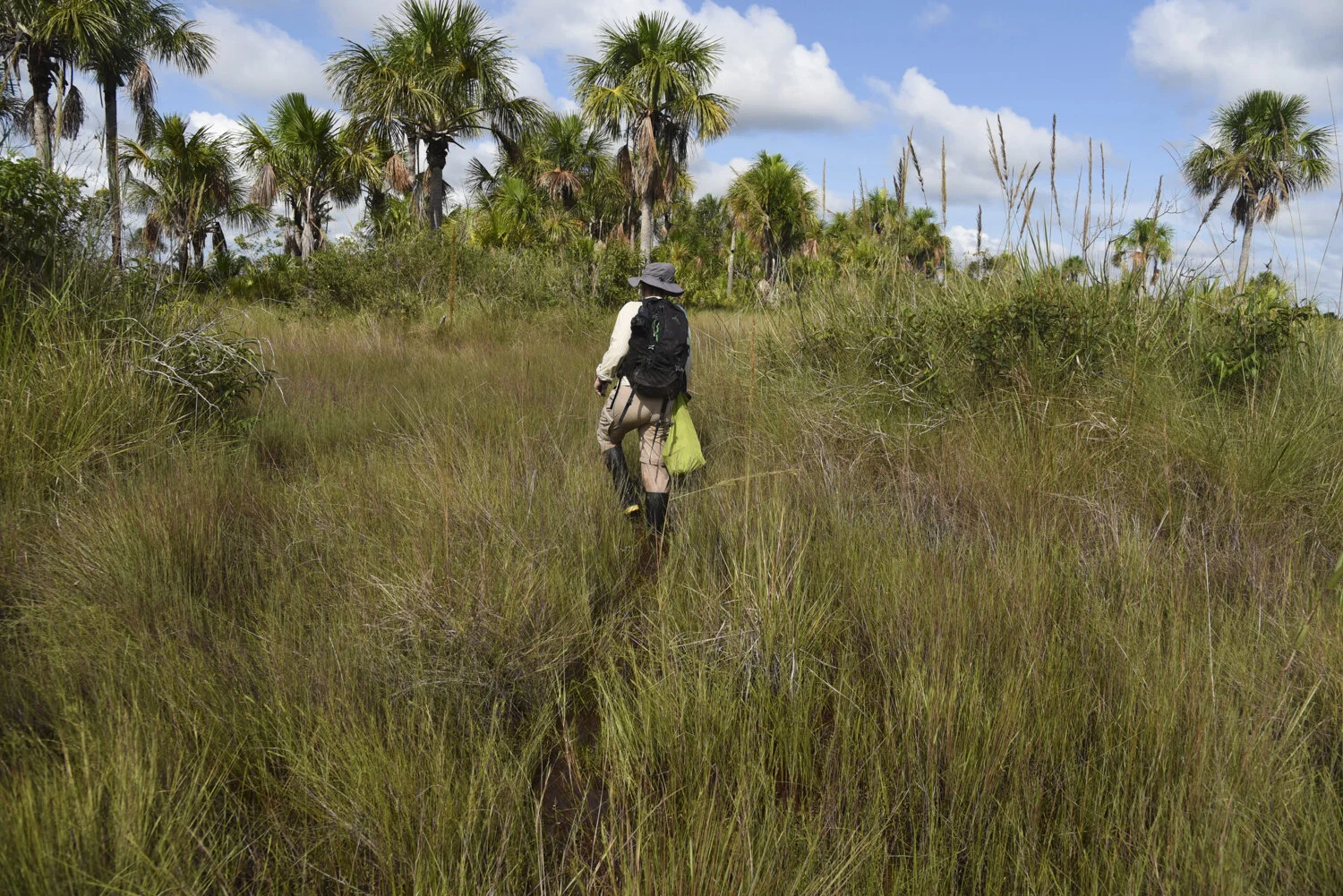
Maisie wades through a section of flooded grass to reach a stand of palms where the group hopes to find the elusive white-woodpecker.
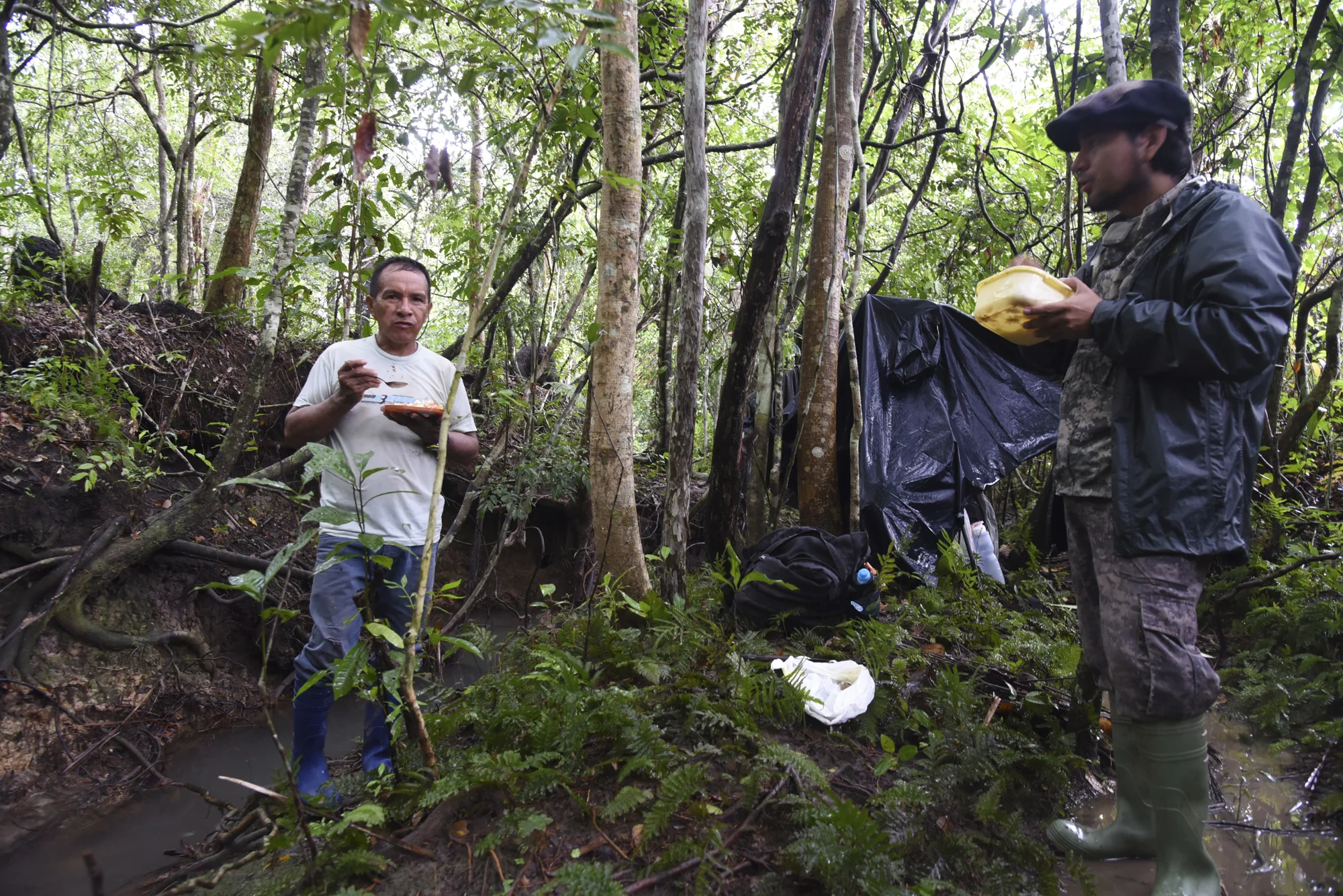
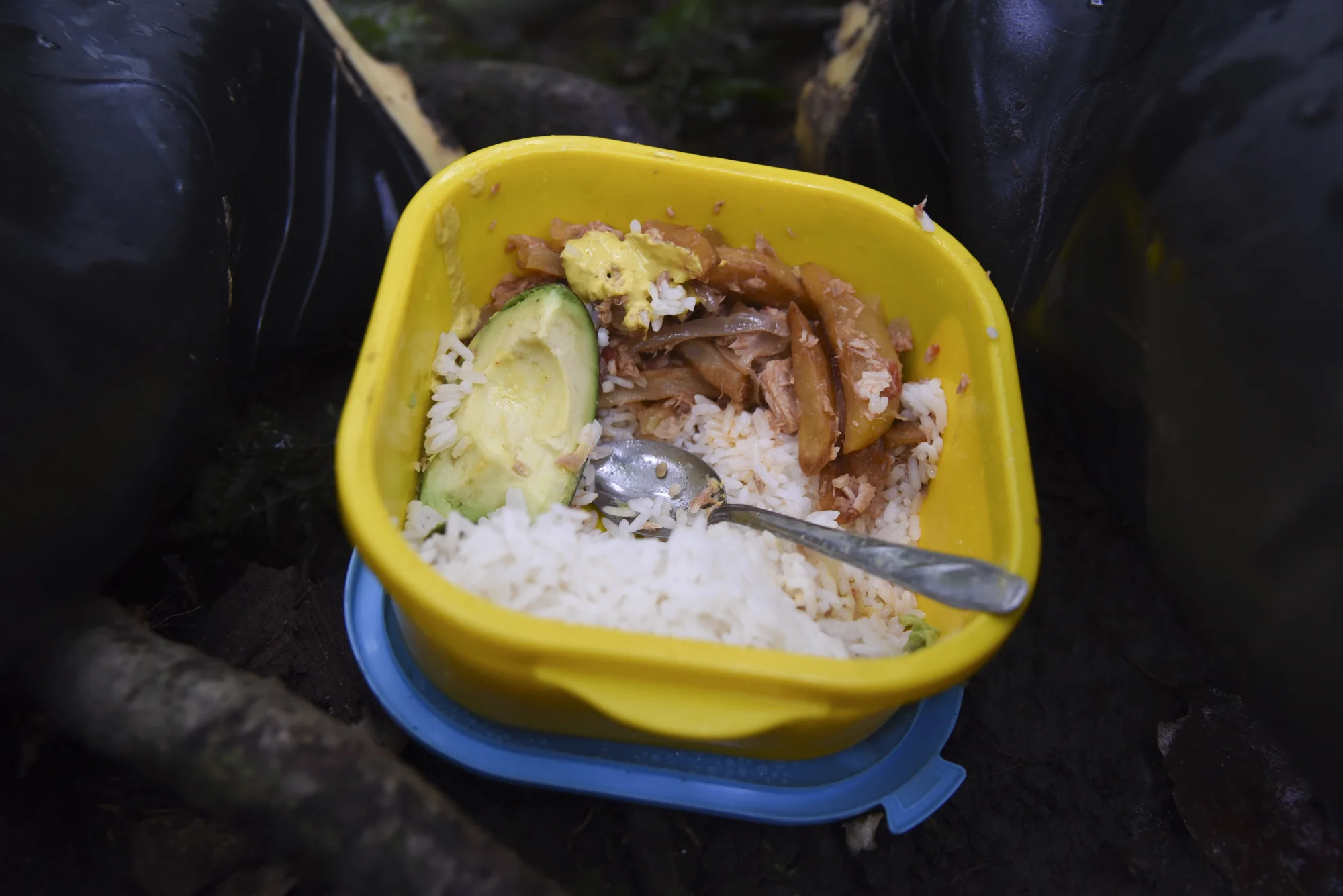
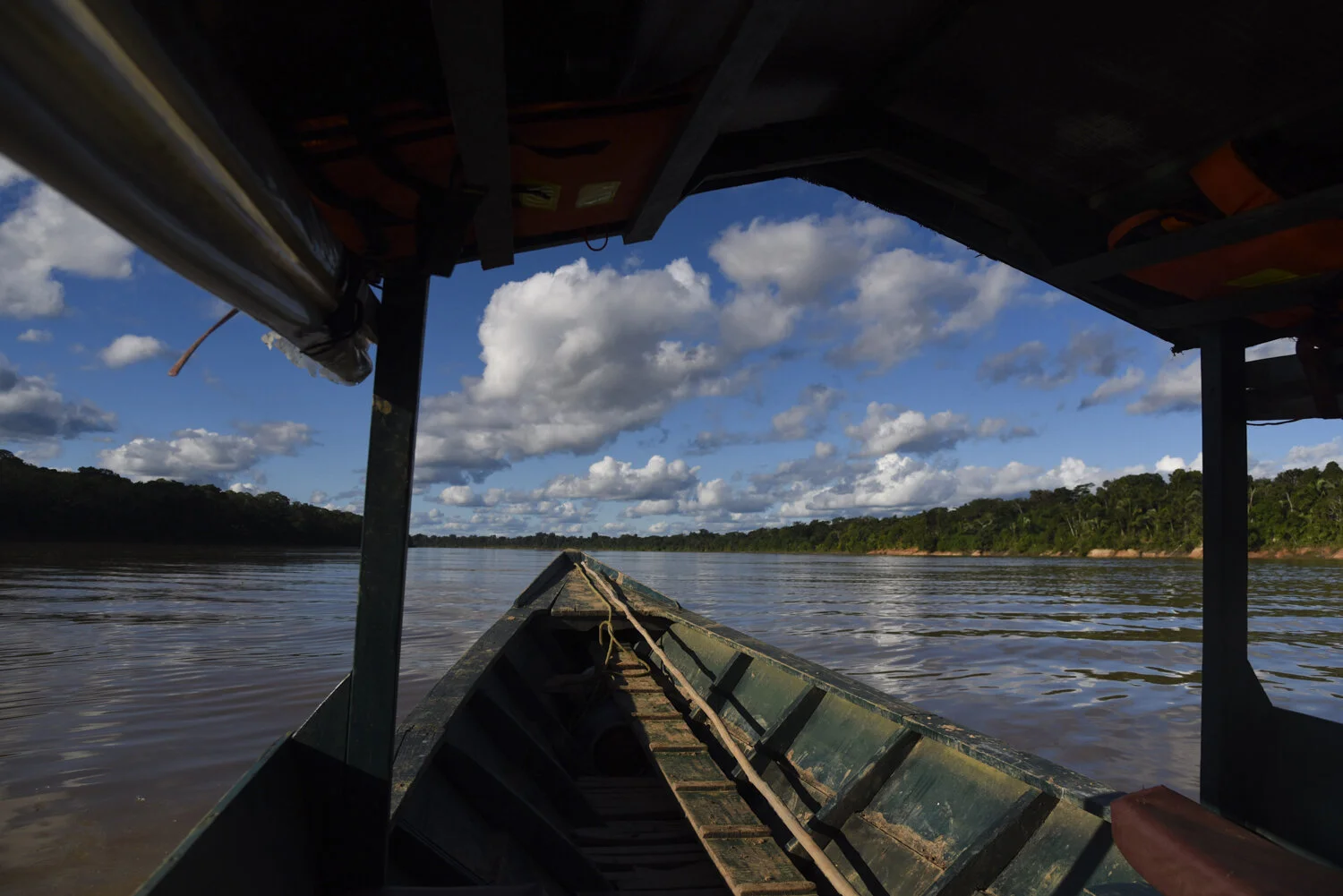
After Yohamir registers his Global Big Day results, he and Manfred return back to camp along the Madre de Dios River.
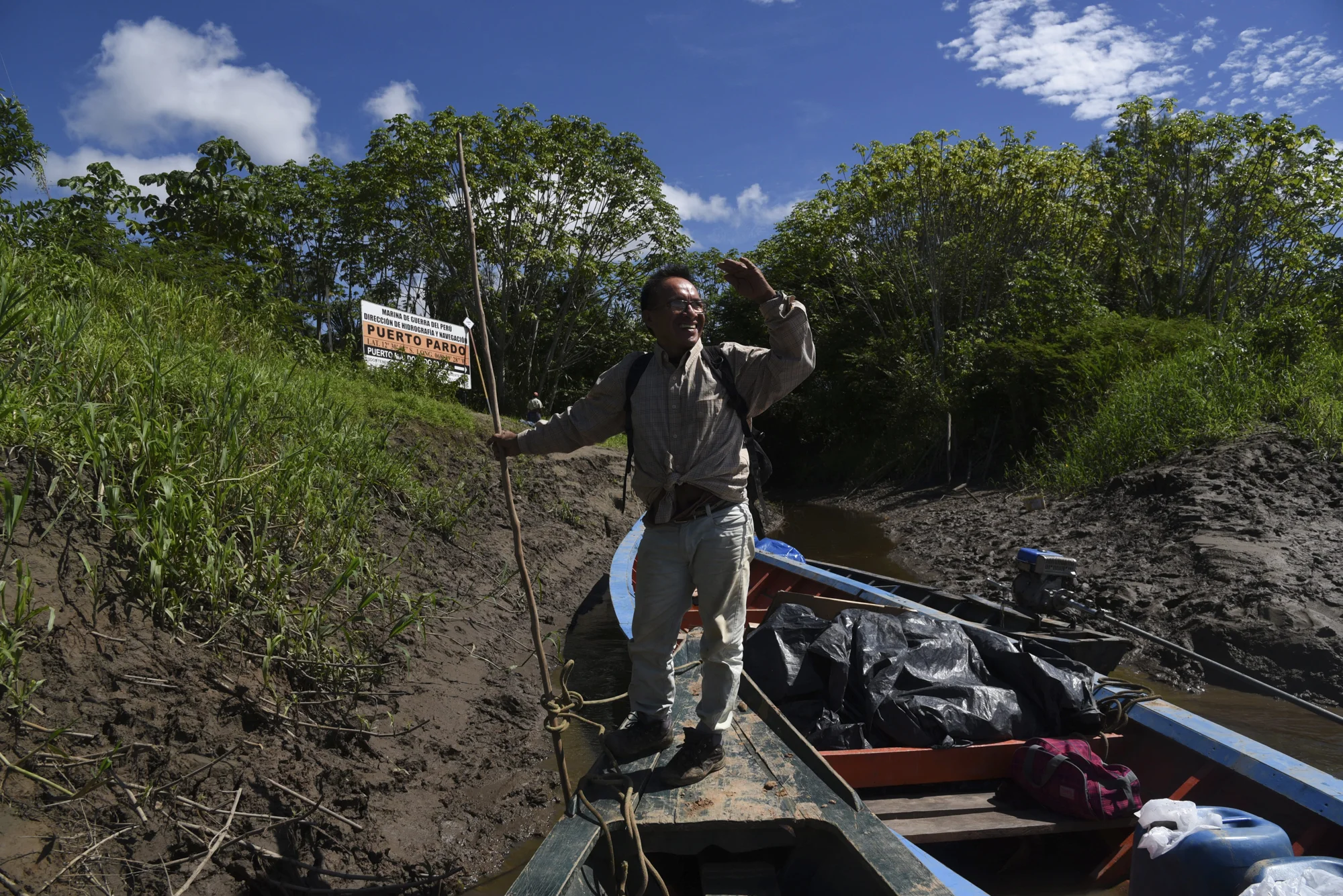
The next afternoon Manfred and Yohamir travel down river to record the Global Big Day results.
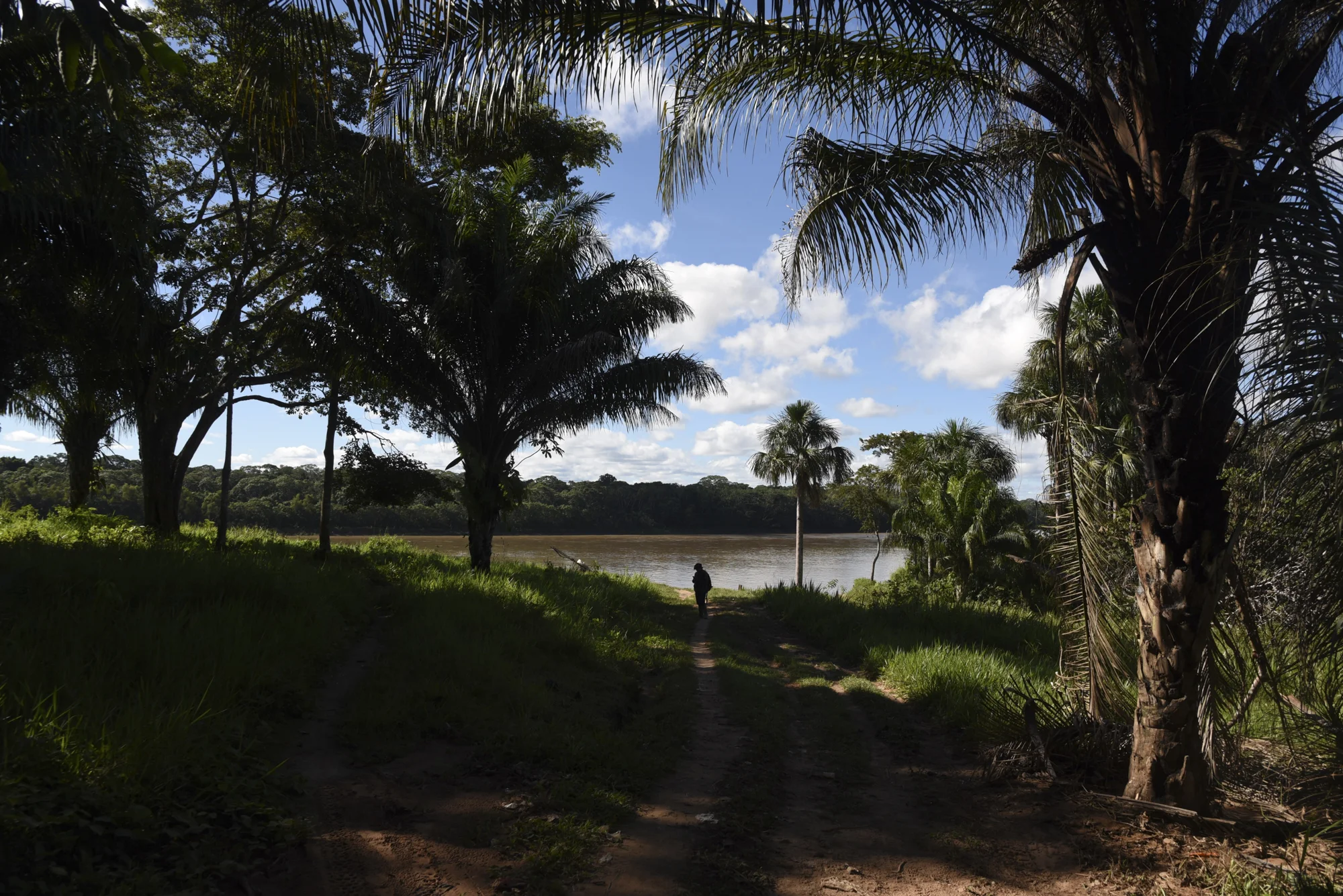
Yohamir searches for cell phone signal at the indigenous community of Palma Real. He must first recharge minutes on his phone to complete the registration of his results.
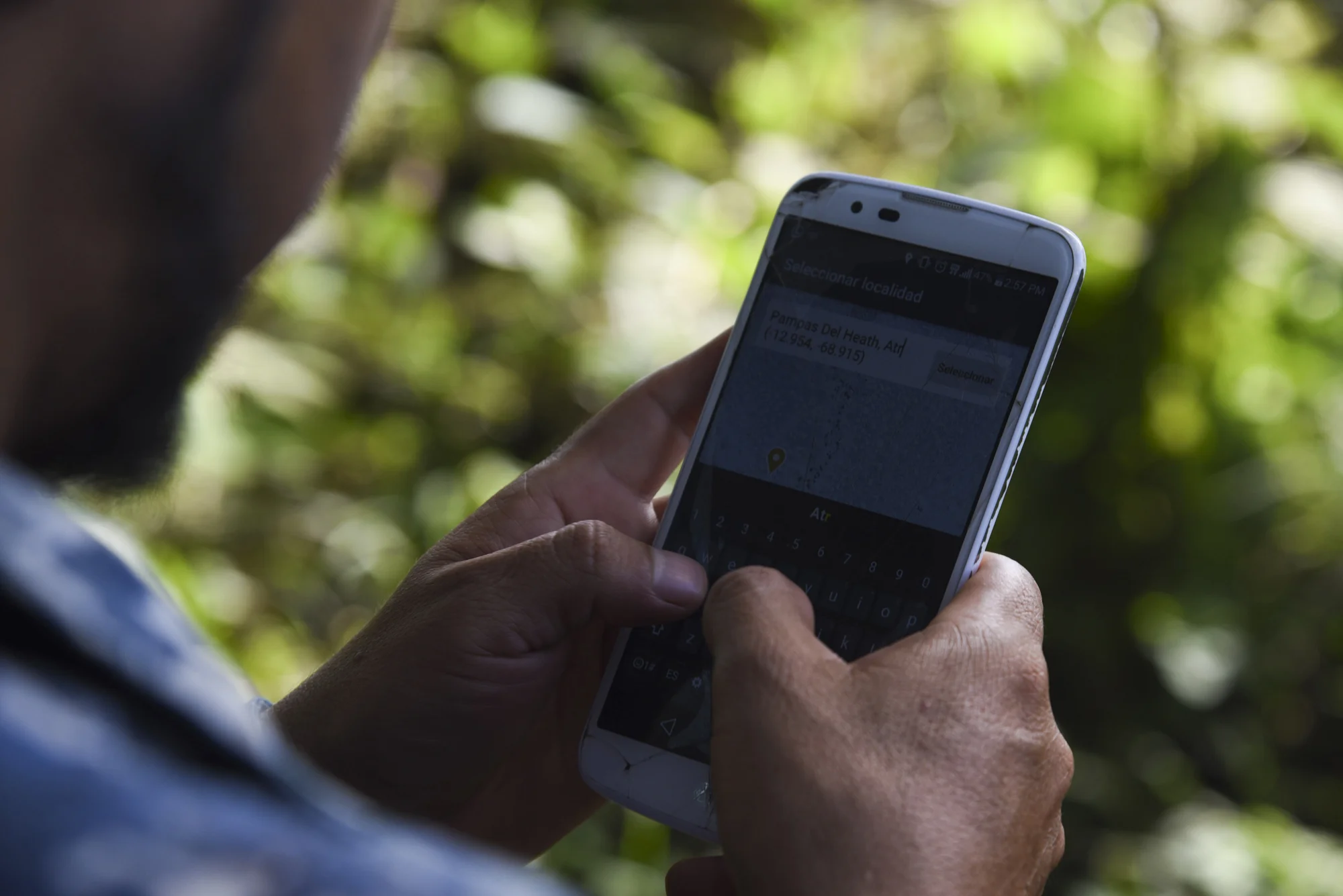
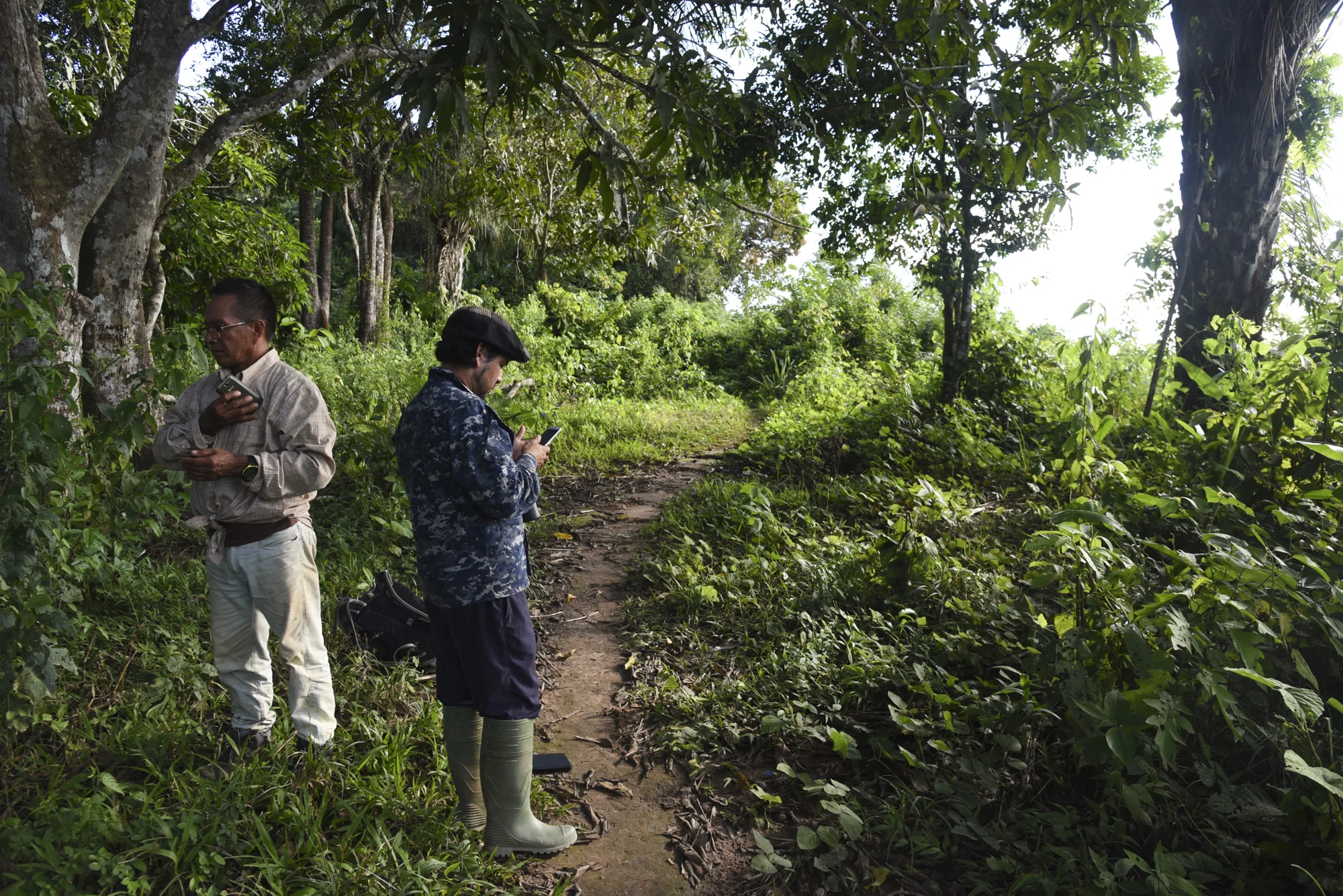
Manfred checks for cell phone signal while Yohamir finishes entering his Global Big Day results.
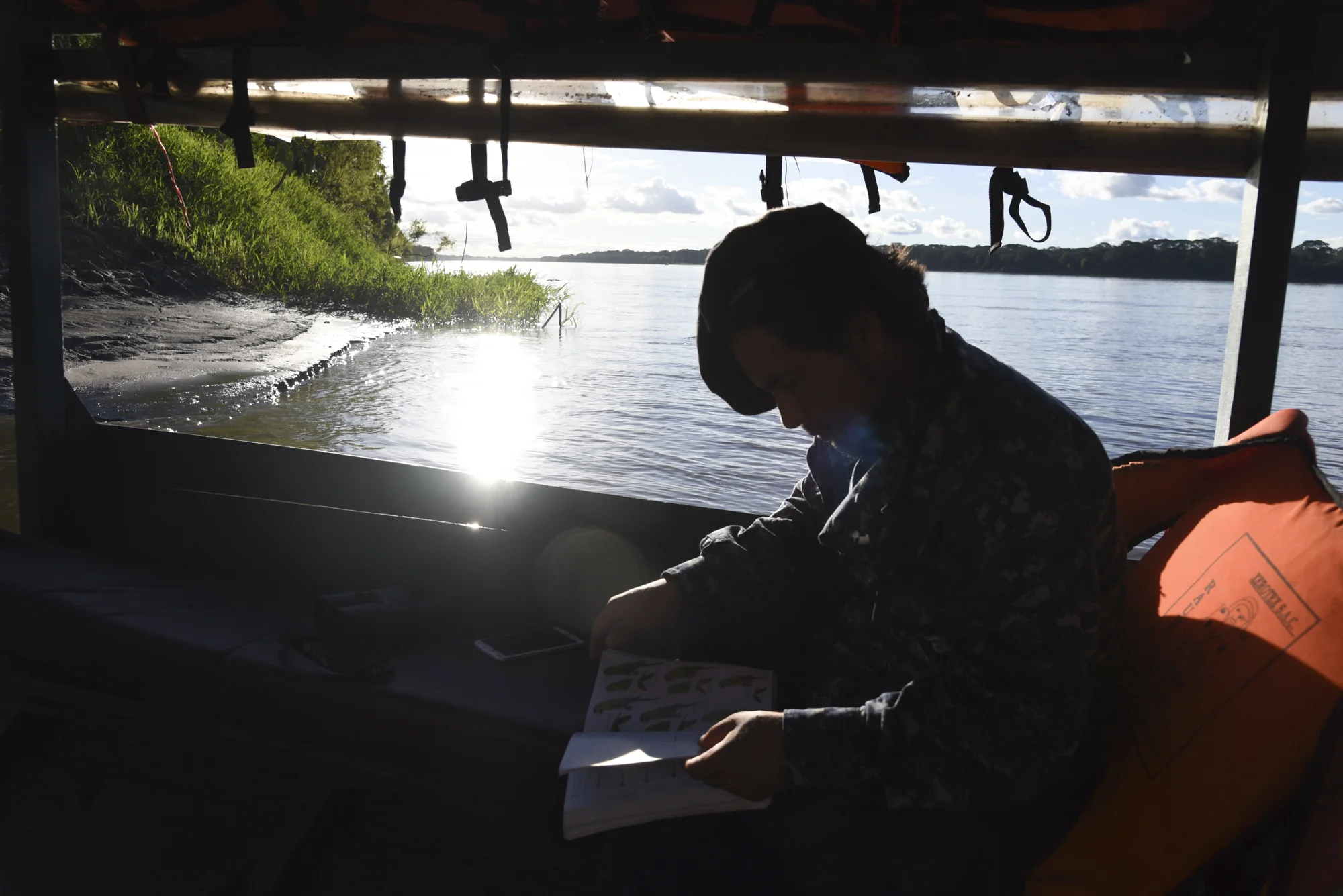
After registering his Global Big Day results, Yohamir continues to study his "Birds of Peru" book and search for more birds during the boat ride back to camp.